Maze Madness - Brain Puzzle
- 4.9
- Rating
- 5.00M
- Installs
- Free
- Price

 Analysis by App-foxy
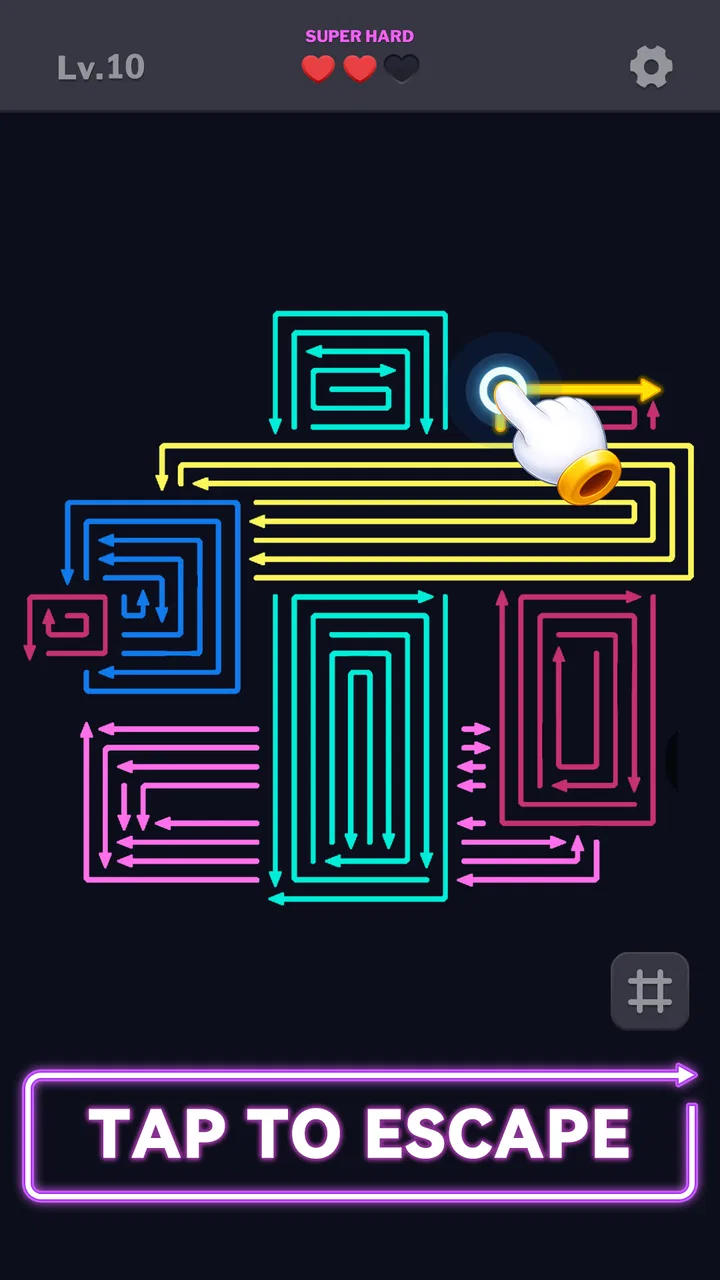
I usually know within a few sessions whether a puzzle game is going to become part of my routine or disappear from my phone. Arrow Puzzle - Arrow Madness made a strong first impression because its central idea is immediately clear: I tap arrows to open a path out of a maze. There is no long tutorial to study and no complicated story to remember. I can start solving almost as soon as the game loads.
That simplicity is also the main question behind the game. A quick puzzle can be enjoyable for a few days, but lasting value depends on whether the decisions remain interesting after the first novelty wears off. After spending time with this puzzle from Ashita Games, I see it as a focused, low-pressure option for short thinking sessions rather than a game I would expect everyone to play for long stretches.
It is free to start, aimed at Everyone, and listed for devices running Android 9 or later. The current version is 1.11.0, and the game has already passed one million installs. Those details make it easy to approach, especially if I want something casual rather than a large download demanding a serious time commitment. The important question is not whether it is easy to try, but whether it deserves a permanent place on the home screen.
You May Also Like

 Blood Strike: 2.5 Anniversary
Blood Strike’s Loadouts Turn Every Drop Into a Tactical Gamble
A close look at Blood Strike’s custom loadouts: how fast access to signature weapons reshapes its battle royale rhythm, rewards preparation, and narrows the gap between fights.

 Pandora - Music & Podcasts
Pandora’s Music Is Easy to Start, but Harder to Recover
Pandora’s strength is its low-effort path from a seed to a station. Its weak spot is how much confidence it asks you to place in connection, setup, and quiet recovery.

 8 Ball Pool
 Is Built on Rivalries, Rematches, and Routine
A close look at the rivalries, rematches, shared routines, and unanswered safety questions that turn a quick pool match into a persistent mobile community.

 Samsung Music
’s Quiet Strength Is Playing What You Already Own
Its reach comes less from spectacle than from dependable access to a personal library. That simplicity is both the app’s strongest retention engine and its ceiling.

 AccuWeather: Weather Radar
AccuWeather Review: A Quick, Clear Forecast for Everyday Decisions
For everyday plans, the best forecast is the one you can understand quickly. AccuWeather makes rain timing, radar, and local conditions easy to act on, with a few trade-offs.

 Hill Climb Racing
Why Hill Climb Racing Still Turns Crashes Into One More Run
A tiny car, a bumpy hill and one more upgrade: Hill Climb Racing keeps resurfacing because its simple chaos makes every near-miss feel personal.
More From Our News Desk



Why the first week feels so satisfying
The opening appeal comes from the relationship between a simple action and a surprisingly careful result. Tapping an arrow feels obvious, yet the surrounding maze can make the order of moves matter. I am not simply reacting quickly; I am reading the arrangement, predicting what will clear, and trying to avoid creating a dead end for the remaining arrows.
I appreciate that the game does not require me to learn a large collection of rules before I can enjoy it. The board itself explains most of the challenge. When I make a mistake, I can usually identify the reason by looking at the blocked route or the order in which I tried to move. That makes each failure feel more useful than random.
During the first week, the best way to play is in small bursts. I found that a few boards between other tasks gave me enough concentration to feel engaged without turning the experience into work. It fits a waiting room, a short break, or the final few minutes before bed better than a game that demands a long uninterrupted session.
The relaxing quality comes from the pace. There is no need to rush every decision, so I can pause and inspect the maze before tapping. That makes it different from fast matching games, timed brain tests, or action puzzles where the pressure comes from speed. Here, the pressure is mostly self-imposed: I want to find a clean sequence instead of tapping aimlessly.
One useful habit is to scan the outside edges before touching anything in the middle. An arrow with a clearly open exit can reveal how the board is meant to unfold, while a central arrow may depend on several earlier moves. I also try to identify pieces that are effectively locked behind others. This approach reduces trial and error and turns each level into a small planning exercise.
Another practical tip is to resist the first apparently available move. An arrow that can leave immediately is not always the best opening if removing it changes the space needed by another piece. I get better results by asking which move creates the most room, not simply which move is legal right now. That distinction is where the game becomes more thoughtful than its one-tap controls suggest.
The first-week experience is especially good for people who enjoy visual order. Clearing a congested arrangement one move at a time gives the game a tidy, almost calming rhythm. It is less suitable for someone looking for character development, exploration, competitive rankings, or a strong narrative reason to continue. Arrow Puzzle stays almost entirely focused on the act of solving.
The store rating is a 4.9 average from around 66 thousand ratings, which reflects how accessible the basic concept is to a large audience. I would not treat that number as proof that every player will enjoy it, but it does match my impression that the game is easy to understand and pleasant to pick up. Its free entry also lowers the risk of trying it for yourself.
What makes the puzzles more than simple tapping
The interesting part is not the tap itself but the order behind it. I often begin by tracing possible exits mentally, then work backward from the most constrained arrows. If one piece has only one realistic route, it becomes an anchor for the rest of the solution. This backward-reading method is more dependable than moving whatever looks most visible.
I also recommend using a deliberate reset mindset when a board starts to feel confused. Continuing after a poor opening can make the puzzle seem harder than it is because I am trying to repair my own sequence. Starting again with a different first move often exposes the actual structure. That is a small workflow change, but it helps preserve the relaxing character instead of turning a level into a battle of stubbornness.
For parents or anyone choosing a game for a mixed-age household, the Everyone rating is reassuring. The rules are straightforward enough for a younger player to understand, while adults can still enjoy the planning aspect. However, the absence of a complicated presentation may also make it feel too plain for players who need constant visual rewards or a strong sense of progression.
The game works well as a mental palate cleanser. After reading, answering messages, or doing repetitive work, I can spend a few minutes focusing on a contained problem with a clear finish. That use case is more convincing to me than the idea of playing continuously for an hour. Its strength is concentration in manageable portions.
Whether it keeps earning attention after the novelty
After the first week, the evaluation changes. A new puzzle game can feel fresh simply because every board asks me to learn its language. Once that language becomes familiar, the recurring value depends on how much variety the arrangements continue to offer and whether solving still feels like reasoning rather than routine. Arrow Puzzle has a solid foundation for repeat play because the order of movement creates room for different levels of difficulty.
My month-to-month view is positive but measured. I can imagine returning whenever I want a quiet logic break, especially if I prefer games that do not punish me for playing slowly. I would not describe it as an essential daily habit for every player. Its long-term role is closer to a dependable puzzle notebook: useful when I want it, but not something I must open every day.
The free model helps with that occasional role. I can keep it installed without committing money at the beginning, then decide whether it has become valuable enough to justify further spending. In-app purchases are listed at $9.99 per item, so I would think carefully before buying anything. For a game built around short, repeatable puzzle sessions, that price point makes the decision more personal: regular players may see value, while occasional players may prefer to stay with the free experience.
I would not spend simply to remove the feeling of being stuck. A difficult board is part of the reason to play, and solving it after stepping away can be more satisfying than bypassing it immediately. If a purchase provides something I genuinely use over time, it may make sense; if it only shortens a moment of frustration, I would wait, take a break, and return with a fresh view.
This is also where the game differs from common alternatives. Match-three puzzles usually reward quick pattern recognition and repeated combinations, while word games depend on vocabulary and recall. Sudoku offers deeper numerical deduction, and physics puzzles often rely on experimentation. Arrow Puzzle sits between these styles: it has the visual accessibility of a casual game, but its best moments come from sequencing and spatial planning.
That middle position is a genuine advantage for players who find Sudoku too formal but match-three games too reactive. It is also a limitation for experts seeking a highly layered logic system. The arrow maze gives me a clear problem to solve, yet it does not try to become a full strategy game. I would choose a more complex logic title when I want extended analysis, and this one when I want a compact challenge with less mental overhead.
A realistic everyday scenario is a commute with several short pauses rather than one long journey. I can solve a board while waiting for an appointment, lock the phone when my turn arrives, and return later without needing to remember a story or rebuild a complicated setup. That stop-and-start convenience is one of the strongest reasons to keep it installed.
For a family, the game can also work as a shared screen challenge. One person can suggest the next arrow while another performs the tap, which turns a solitary puzzle into a brief conversation about consequences. The trade-off is that an experienced player may solve boards quickly while a beginner needs more time to inspect the layout. It is better as cooperative thinking than as a serious competitive activity.
The maintenance burden is low, but not invisible
By maintenance, I mean the effort required to keep the game enjoyable rather than the effort of managing a complicated account or collection. Arrow Puzzle asks very little from me. I do not need to memorize a large rulebook, maintain a build, gather resources, or check in at a particular time. That low commitment is valuable because it prevents the game from becoming another obligation.
The main maintenance task is managing my own play length. Because each puzzle is compact, it is easy to tell myself I will complete one more. If I am using the game as a break, I get more value by deciding in advance whether I have time for one board or several. Otherwise, a relaxing pause can quietly become a longer session without adding much satisfaction.
I also find that alternating between solving and stepping away protects the experience. When I stare at the same maze for too long, I stop seeing the available routes and begin repeating the same guesses. A short pause changes the visual relationship between the arrows. This is not a special feature; it is a practical way to use the game’s slow, observation-based design to its advantage.
The current version, 1.11.0, is a useful detail for anyone deciding whether to try it now, but version numbers alone do not guarantee that the game will remain fresh forever. Long-term value will depend on whether the available puzzle flow continues to feel varied to an individual player. I would judge that personally after several sessions rather than assuming a high rating settles the question.
Storage and attention are also part of the decision. Since the game is free and has more than one million installs, it is an easy candidate for an experimental download. Still, I would remove it if I noticed that I was opening it automatically without enjoying the solving. A puzzle app earns its space when it provides a real mental reset, not merely because it is familiar.
Where fatigue can begin
The same clarity that makes the game approachable can eventually make it feel narrow. If I play for too long in one sitting, the visual language may start to blend together. I may still be solving correctly, but the sense of discovery becomes weaker. Players who need new mechanics, characters, story chapters, or changing objectives may reach that point sooner than players who enjoy repetition with small variations.
Another source of fatigue is the emotional difference between “challenging” and “unclear.” A good board makes me recognize the reason for a mistake. A less satisfying moment occurs when I feel I am testing moves without gaining useful information. When that happens, I do not assume the entire game has failed; I simply stop forcing the session and return later. The game is most enjoyable when I approach it patiently.
There is also a trade-off in the lack of urgency. Players who want a strong adrenaline loop may find the calm pace too gentle. I can appreciate the absence of timers, but I understand why someone might prefer a game with escalating pressure or a competitive target. Arrow Puzzle is designed around careful attention, so it will not replace a fast arcade puzzle for everyone.
The purchase structure may affect long-term comfort as well. A free game is easy to sample, but an item priced at $9.99 creates a noticeable threshold for casual users. I would recommend deciding on a personal rule before buying: either keep the game entirely free until it proves its place in your routine, or spend only when the purchase clearly improves repeated use. That avoids paying because of a temporary burst of enthusiasm.
I would also skip it if my main goal is social play. The game can be discussed or shared informally, but its core appeal is individual observation. Players searching for live matches, team goals, or a community-driven challenge should look elsewhere. Likewise, anyone who dislikes restarting a puzzle after a poor sequence may prefer a more forgiving format with frequent hints or automatic correction.
My long-term verdict on keeping it installed
My final judgment is that Arrow Puzzle - Arrow Madness earns a place on my phone when I treat it as a compact thinking tool, not as an all-purpose entertainment system. Its arrow-and-maze concept is clear, its pace is comfortable, and the best boards reward planning rather than frantic tapping. I can recommend it to someone who wants a free puzzle for quiet breaks and prefers visual logic over words, numbers, or speed.
I would be more cautious with a player who needs constant novelty. The game’s lasting appeal comes from refining how I read each arrangement, so its value grows through better solving habits rather than through a broad collection of unrelated activities. That is a narrower promise, but it is an honest one. The game does not need to serve every kind of player to be worthwhile.
Around 678 written reviews accompany the broader rating picture, while the average remains 4.9. I see those figures as signs of strong player approval, but my recommendation still depends on expectations. A high score cannot turn a focused puzzle into a narrative adventure, and it cannot remove the possibility of repetition for people who play heavily.
For me, the deciding test is simple: after the first burst of curiosity, do I still want to solve one board when I have a few quiet minutes? In this case, yes, provided I keep sessions short and accept that not every puzzle will feel equally rewarding. The game works best as a repeatable pause in the day, not as a demanding long-term commitment.
Ashita Games has kept the idea approachable enough for beginners while leaving room for players to develop a more careful method. I especially like starting with constrained arrows, checking how much space each move creates, and abandoning a tangled attempt before frustration takes over. Those habits give the straightforward controls more depth than the first glance suggests.
My recommendation is to try it free, play in short sessions, and judge its staying power by the quality of your breaks rather than by how many boards you can clear at once. If you enjoy tidy visual problems and calm concentration, it can become a reliable companion. If you want story, social competition, or constant mechanical change, the usual alternatives will probably hold your attention longer.
FAQs for Maze Madness - Brain Puzzle
01What is Arrow Puzzle - Arrow Madness about?
Arrow Puzzle - Arrow Madness is a captivating puzzle game that challenges players to direct arrows on a grid to hit various targets. The game combines strategic thinking with quick reflexes, offering increasingly complex levels that require precise moves and planning. It’s perfect for puzzle enthusiasts looking for both relaxation and mental challenges.
02Is Arrow Puzzle - Arrow Madness free to play?
Yes, Arrow Puzzle - Arrow Madness is free to download and play on both Android and iOS devices. While the game includes free levels, it also offers in-app purchases for additional features, hints, or to remove ads. Players can enjoy the full experience without purchases, but these options can enhance gameplay.
03What are the key features of Arrow Puzzle - Arrow Madness?
Arrow Puzzle - Arrow Madness features a variety of levels with increasing difficulty, a simple yet engaging interface, and intuitive controls. It also includes daily challenges, leaderboards to compete with friends, and an offline mode. These elements make it a versatile game suitable for both casual and dedicated players.
04Does Arrow Puzzle - Arrow Madness require an internet connection?
Arrow Puzzle - Arrow Madness can be played offline, making it a great option for on-the-go gaming without worrying about connectivity. However, to participate in online leaderboards or access certain features like daily challenges, an internet connection is required. This balance offers flexibility for different playing scenarios.
05How can I progress in Arrow Puzzle - Arrow Madness if I get stuck?
If you find yourself stuck on a level in Arrow Puzzle - Arrow Madness, the game offers hints to help you advance. Additionally, reviewing strategies or practicing different approaches can be beneficial. Engaging with online communities or forums might also provide useful tips and tricks shared by other players.
Pros
- Engaging puzzles with increasing complexity.
- Visually appealing graphics and smooth animations.
- Intuitive controls enhance user experience.
- Regular updates with new levels and features.
- Offline mode available for uninterrupted play.
Cons
- Occasional ads can disrupt gameplay.
- Limited hints may frustrate some players.
- In-app purchases can be pricey.
- Some levels feel repetitive over time.
- Lacks multiplayer or social features.

Maze Madness - Brain Puzzle
Gallery